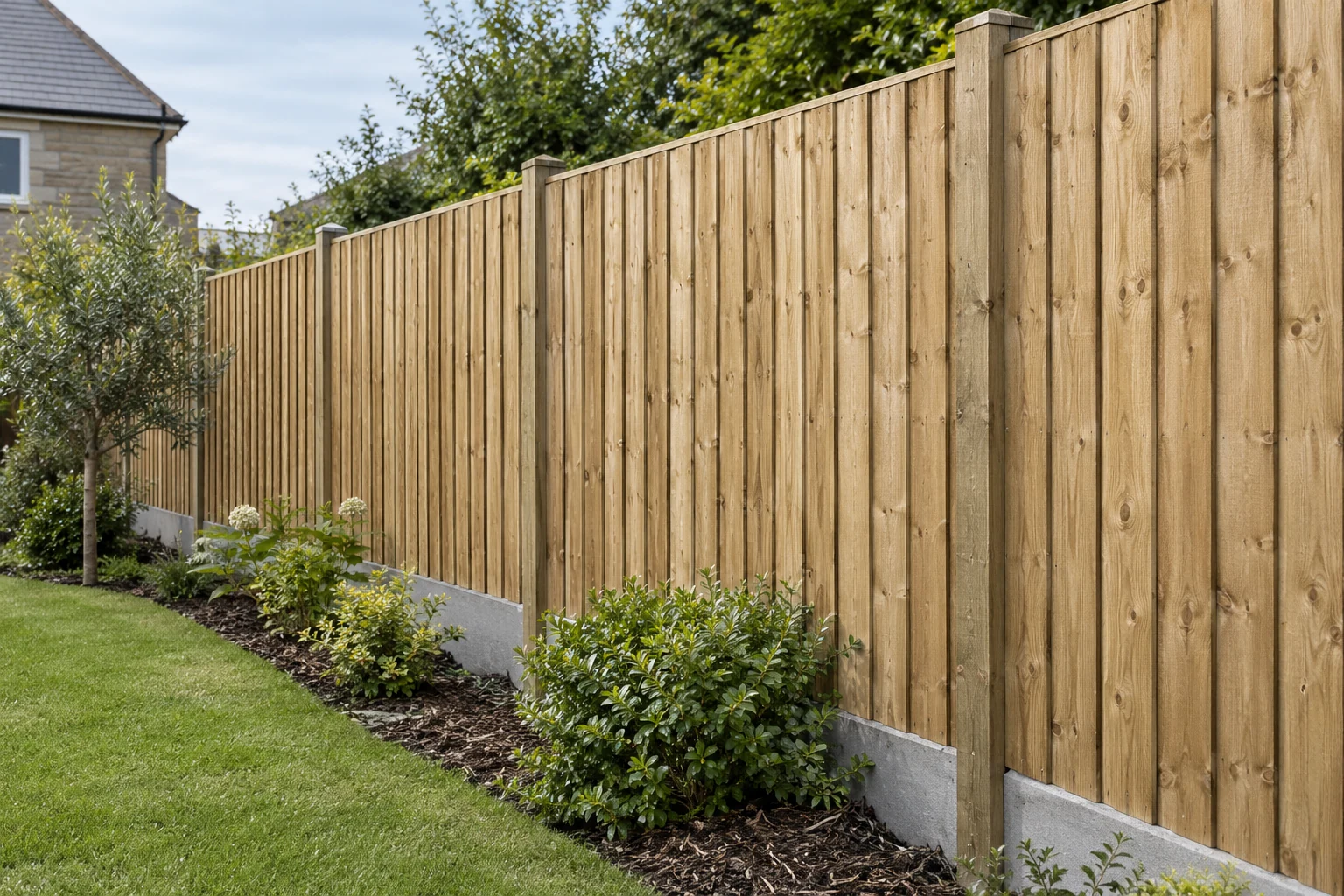
Begin with the boundary you want to improve
Explain how the current fence falls short. You may want to replace worn timber, improve privacy around a seating area or bring different sections into a more consistent appearance. Describe the intended result before settling on a particular panel or board arrangement.
Our Hackney area overview is the starting point for local enquiries. Provide the full address and the position of the fence within the property. Be specific about the working entrance, particularly if the garden is reached from a different street entrance or a shared route.
Balance enclosure, light and appearance
More solid screening can make a space feel different from an open trellis or slatted design. Consider the positions from which privacy matters and the parts of the garden where keeping an outlook is preferable. Height is only one part of that decision.
Our privacy fencing guide explores gaps and viewing angles. Use photographs to communicate the appearance you prefer, then ask for the actual dimensions and construction to be recorded. A picture alone cannot establish how the fence will perform in the particular space or connect to existing features.
Plan the run from end to end
Identify corners, changes in level, gate openings and junctions with retained sections. Discuss the intended top line and the treatment of gaps beneath the fence. These details help avoid selecting panels in isolation from the shape of the boundary.
Mention planting, paving, sheds and known services beside the proposed work. State what must stay and what can be moved beforehand. If the existing construction holds back soil or protects a raised edge, explain that function separately so the necessary assessment is not confused with ordinary garden screening.
Choose materials as an assembly
Our fence types overview provides a useful appearance reference. Ask how the selected boards or panels, posts and connections work together. Record the finish and any gates alongside the main fence, including their position and opening requirements.
If some existing components are to be reused, ask whether they are suitable for the proposed construction. New panels do not automatically make old supports serviceable. A clear specification should distinguish retained parts from new materials so you understand what the installation actually replaces.
Decide whether full replacement is needed
If only a small section is damaged, compare a targeted repair with renewing the entire run. Our repair or replace guide helps frame that discussion. Consider the condition of adjacent sections and the appearance of new timber beside weathered materials.
The Hackney repair page is another enquiry route where the main issue is localised damage. You do not need to choose the larger job before asking for advice on the scope. The assessment should establish what each option would retain and the limitations of doing so.
Check access beyond the front entrance
Describe the full route to the work area. Narrow passages, turns, steps or a route through occupied rooms can affect material handling and component sizes. Explain who provides entry and any times when shared routes need to stay clear.
Confirm permission before relying on neighbouring land for access or temporary storage. Discuss unloading separately from carrying materials to the boundary. If an owner or managing agent controls entry, provide their requirements early rather than assuming access arrangements can be resolved on the day.
Review removal and finishing work
Ask the quotation to identify the old panels, posts and foundations included in removal. Confirm disposal, protection of nearby features and any reinstatement. Discuss how the new run meets what remains, including expected differences in colour or finish.
Our fencing costs guide explains why preparation and access influence the price. Use our quotation comparison checklist to review equivalent scopes and clarify exclusions. Agree how unexpected conditions would be reported and approved before additional work proceeds.
Request a free Hackney installation quote
Call 020 3797 3058 or request a free quote with the address, approximate length and your priorities. Include access details and any known property requirements. Availability and the next assessment step can then be discussed against the particular project.
Confirm authority to alter the boundary and resolve uncertainty over its position before instruction. Our fence height and planning guide provides background where changes are proposed, but site-specific requirements still need checking. Before accepting, review the applicable product and workmanship terms, care instructions and agreed completion arrangements.
Frequently asked questions
Can I request a quote without knowing the exact fence length?
An approximate length and description of the boundary can start the enquiry. Final dimensions and site conditions need confirmation before the installation scope is agreed.
Can existing posts be reused for a new fence?
Only where they are suitable for the proposed construction and condition. Ask the assessment to distinguish retained supports from those needing replacement.
What should I explain about access to a Hackney garden?
Describe the complete route, including gates, turns, steps and shared passages. Identify who provides entry and any restrictions affecting materials or working space.