Describe the operational problem
Begin with why the boundary needs work. Worn fencing may detract from an outdoor area, a damaged section may interrupt its use, or screening may be needed between different activities. Explain the intended result and identify which parts of the premises are affected.
Our Hackney area page is the local enquiry route. Provide the full address and working entrance, along with the contact responsible for the boundary. Describe whether the outdoor space is used by one business, several occupiers or residents so the coordination requirements are understood.
Organise the work by boundary section
Separate damaged components from runs that need full replacement. Include corners, gates and connections to retained fencing or walls. A brief that distinguishes these areas makes it easier to compare options and avoid assuming every section needs the same treatment.
Our Hackney repair service covers localised damage. The Hackney installation guidance explains planning a new run. Ask the quotation to state what remains, what is removed and what is newly supplied for each area rather than combining different conditions into a single broad description.
Make the purpose of the fence explicit
Visual screening, an ordinary boundary division and a specialist security barrier are different requirements. Explain the function you need and supply any prescribed product or performance specification. Suitability and capability must be reviewed against that information before a specialist scope is accepted.
Mention structural retention, attachment to a building or a protective function beside a change in level separately. A general fencing proposal should not be treated as confirmation of specialist structural or guarding capability. Identifying these conditions early helps establish the appropriate assessment and responsibilities.
Keep necessary routes available
List the entrances and paths used by staff, residents, visitors and deliveries. Identify times when those routes need to remain available. If work affects a communal passage or shared yard, confirm who can agree temporary arrangements and communicate with the people using it.
Our landlord and managing-agent guidance covers coordination between approving parties and occupiers. Discuss the sequence of removal and installation before scheduling. A programme should reflect the actual site and products; out-of-hours work and immediate attendance require confirmation rather than assumption.
Specify access from arrival to work area
Give the correct entrance and describe the route to the boundary. Include narrow gates, turns, steps and any passage through occupied space. Explain known booking, key or induction requirements so they can be considered before a date is agreed.
Confirm where materials can be placed and how removed fencing will leave. Permission to enter is not automatically permission to obstruct a communal route or use adjoining land. Resolve those arrangements with the responsible person and identify who can provide access when the work starts.
Compare the finished assembly
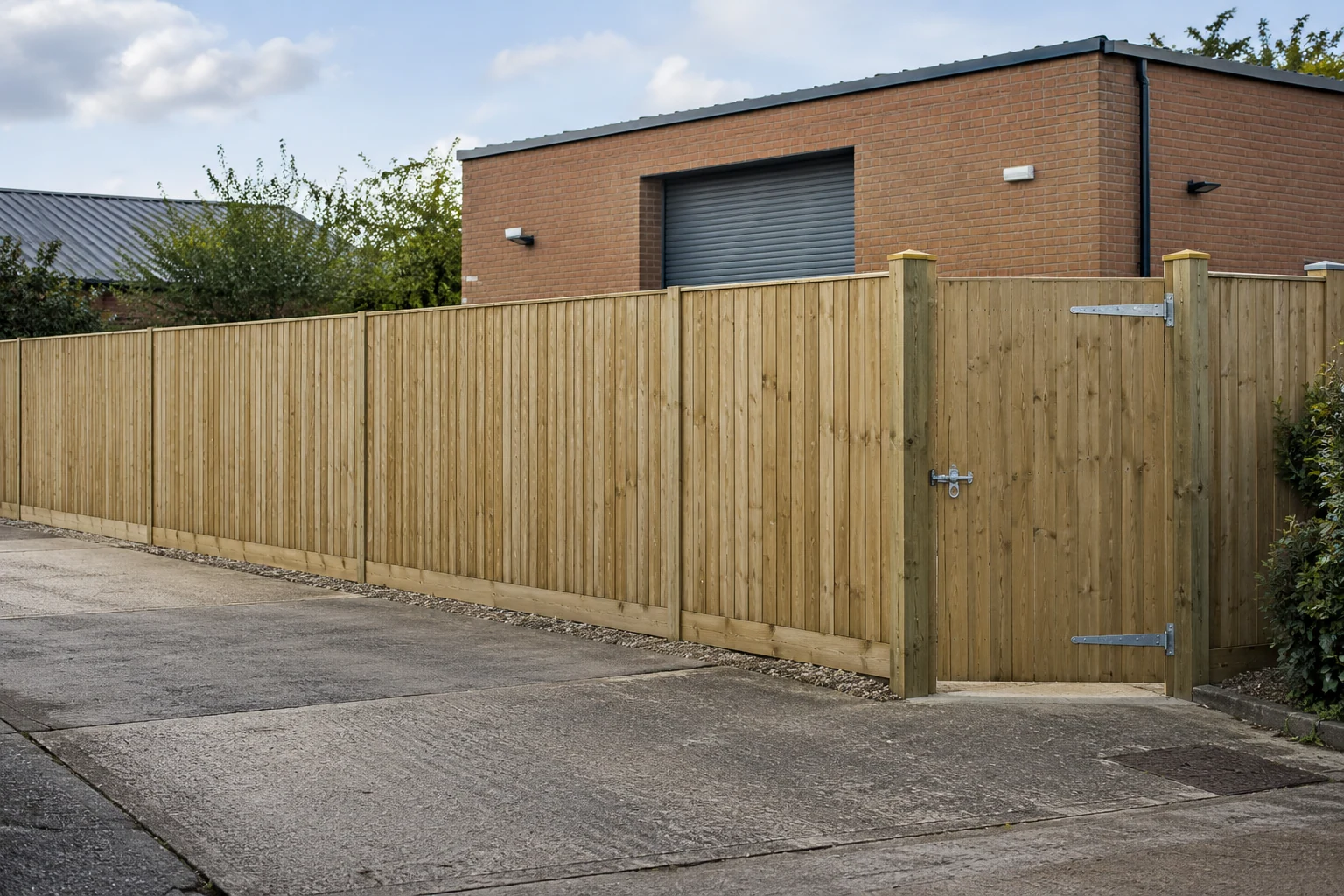
Our fence styles overview can help communicate appearance, but purchasing decisions also need dimensions, posts, connections and finish. Include gates and changes in level. If new fencing meets retained sections, discuss how the junction will look and any difference between new and weathered materials.
Point out planting, paving, equipment and known services close to the work. Ask which preparation, protection, removal and reinstatement tasks are included. Our quote review checklist helps compare equivalent scopes and identify exclusions before approval.
Agree who can make decisions
Name the person accepting the quotation and the person providing site entry. These may be different people. Establish who can approve variations if additional defects or changed conditions are discovered, and how the revised scope and price will be recorded.
Supply procurement and documentation requirements early. Resolve uncertainty about ownership or the intended boundary position before instruction. This gives the proposed work a clear approval route and reduces the risk of a site contact being asked to make decisions outside their authority.
Request a free commercial fencing quote
Call 020 3797 3058 or request a free quote with the Hackney address, intended scope and main operating requirements. Include the approving contact and any available specification. The enquiry can then be discussed for suitability, availability and the next assessment step.
Before acceptance, confirm the product and workmanship terms applying to the job and any care information required. Agree how completion will be reviewed and the condition in which access routes and the work area should be left. A defined proposal helps the organisation understand both the work purchased and the arrangements needed to carry it out.
Frequently asked questions
Can commercial repairs and replacement be planned together?
Yes. Identify the different areas and ask the quotation to distinguish retained parts, removal and new materials for each scope.
Can work be arranged around a shared access route?
Explain who uses the route and when it must remain available. The work sequence and temporary arrangements need agreement before scheduling.
What if the project has a specialist security specification?
Provide it with the enquiry. Product suitability and capability need review before the specified work can be accepted.