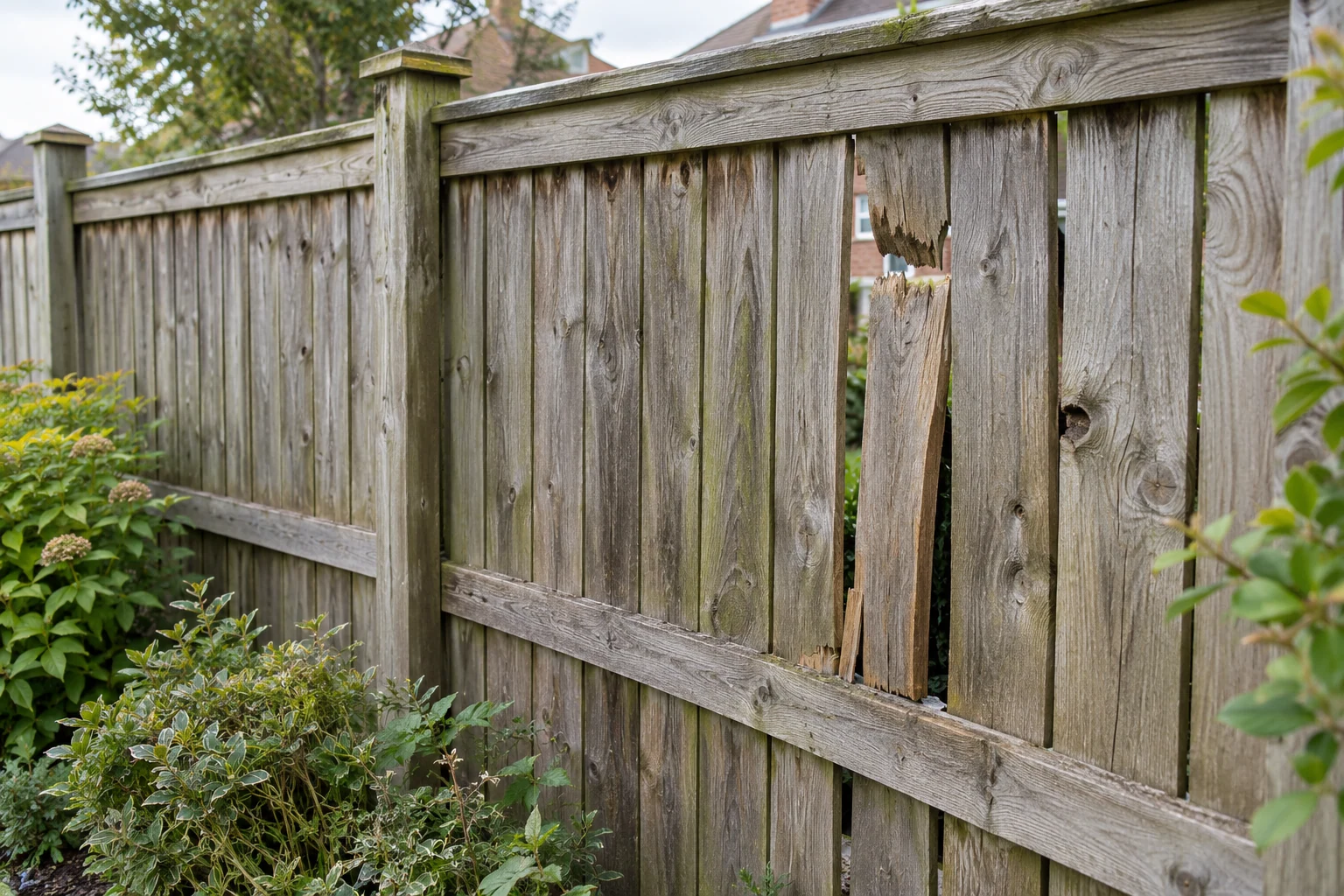
Recognise the problem without testing it yourself
Movement in a fence may be most visible in the panels even when a post is the underlying problem. A post can lean, loosen within its footing or deteriorate close to the ground. Damage may also affect the connections between the post and the panels. A photograph is useful for an initial conversation, but it does not establish the full condition below ground.
Do not push or lean against an unstable fence to demonstrate the movement. Keep people and pets clear of the affected section. Tell us if it is beside a public route, shared access or a place where the failure could affect other users. Scheduling and any urgent attendance need confirming directly.
Repair or replacement depends on the condition
A repair option must suit the post material, the nature of the damage and the loads from the fence. Not every leaning post needs the same treatment, and a reinforcement detail is not automatically suitable for every situation. The aim is to agree a repair that addresses the actual condition rather than simply hold the visible section upright.
Replacement may be more appropriate where the post is substantially deteriorated or the existing arrangement is unsuitable. If the proposed solution retains part of the old structure, ask what remains and what the repair is intended to achieve. An assessment should distinguish confirmed findings from conditions that cannot be seen until work begins.
What happens to the adjoining panels?
Panels connected to a failed post may still be serviceable, but removing and refitting them requires care. Their condition, dimensions and fixings influence whether they can reasonably be retained. Older or already damaged timber may not tolerate handling in the same way as sound material.
Ask the quotation to identify the panels being kept and any expected replacement. If the fence has several weak supports, replacing one post may not address problems elsewhere. Our panel replacement page explains how visible damage and supporting condition are considered together.
Existing footings and nearby surfaces
The work below ground can be a significant part of post replacement. Old concrete, roots, paving and restricted working space may affect how the existing support can be removed and a new one installed. A simple count of posts does not capture these differences between sites.
Point out known buried services and nearby structures before work is agreed. If paving or another surface needs disturbing, confirm what reinstatement is included. Ground conditions and the proposed fence specification should inform the detail; a generic hole size quoted without looking at the site is not a complete installation plan.
Timber or concrete posts?
The choice needs to suit the fence system and the appearance you want. Different post arrangements use different fixing or slot details, and a change of material may affect how the existing panels are reused. Discuss the whole arrangement rather than selecting a post in isolation.
Appearance, maintenance and handling all form part of the conversation. We do not assume that a particular post type is the best choice for every boundary. If you are planning a wider style change, compare the repair with a full installation scope before investing in components that may not suit the future fence.
A clearly defined repair quotation
The quotation should identify the affected posts, the intended repair or replacement, associated panel work and any preparation. Removal of old footings, disposal and reinstatement should be addressed specifically. Ask how unexpected conditions will be discussed before extra work proceeds.
Access can influence the job even when only one post is involved. Mention narrow passages, steps, parking restrictions and any need for access from a neighbouring property. Establish who can authorise work to the boundary and arrange necessary access before a date is agreed.
Arrange a post repair assessment
Call 020 3797 3058 with your postcode and a description of the movement or damage. Give an approximate count of affected posts if it is safe to observe them. We offer free quotations and can discuss the next information needed. Ask for the applicable guarantee terms for the agreed work and how they relate to existing components that remain.
Frequently asked questions
Can a leaning post be straightened rather than replaced?
Possibly, but the cause of movement and the condition of the post and footing need assessing. Simply returning it upright may leave the underlying problem unresolved.
Can the existing panels stay?
They may be reusable if their condition and compatibility allow. The quotation should identify retained panels and explain how additional damage will be handled if discovered.
Does post replacement include paving repairs?
Only where the agreed scope includes that reinstatement. Raise nearby paving or other surfaces during the enquiry so the work and exclusions are clear.