Choose the right route for your enquiry
If you are replacing a complete boundary, begin with the approximate length and the result you want: better screening, a different appearance or a sound replacement for deteriorated fencing. Our Leytonstone installation service explains what to discuss before choosing a specification.
For a broken panel, loose connection or leaning section, start with our Leytonstone repair service. Describe what you can see without touching unstable components. You do not need to identify the technical cause before calling. An assessment should establish whether the surrounding fence can sensibly remain.
Plan a visit around Leytonstone access restrictions
Some Leytonstone streets fall within Waltham Forest School Streets schemes. The council lists Davies Lane and George Tomlinson schemes, with affected roads including parts of the Bushwood area and Harold Road. These examples do not mean every nearby address is restricted.
Check the council's current School Streets guidance for the exact street and approach route. Eligible trades vehicles have an advance exemption process; delivery vehicles are treated differently. Mention a relevant restriction when arranging a visit so attendance and material delivery can be considered separately, with eligibility confirmed rather than assumed.
Measure the route, not just the fence
A panel has to reach the boundary as well as fit it. Explain any narrow side passage, turn beside an extension, steps or shared gate. If the only route is through the house, say so at the enquiry stage. This can affect how the work is organised and which details need checking at a survey.
Describe the narrowest points and any overhead obstructions you know about. Photographs from accessible positions can help explain the route, but there is no need to lift a damaged panel or enter neighbouring land. Agree who will unlock entrances and whether anything needs moving before the proposed work date.
Match the fence to the space you use
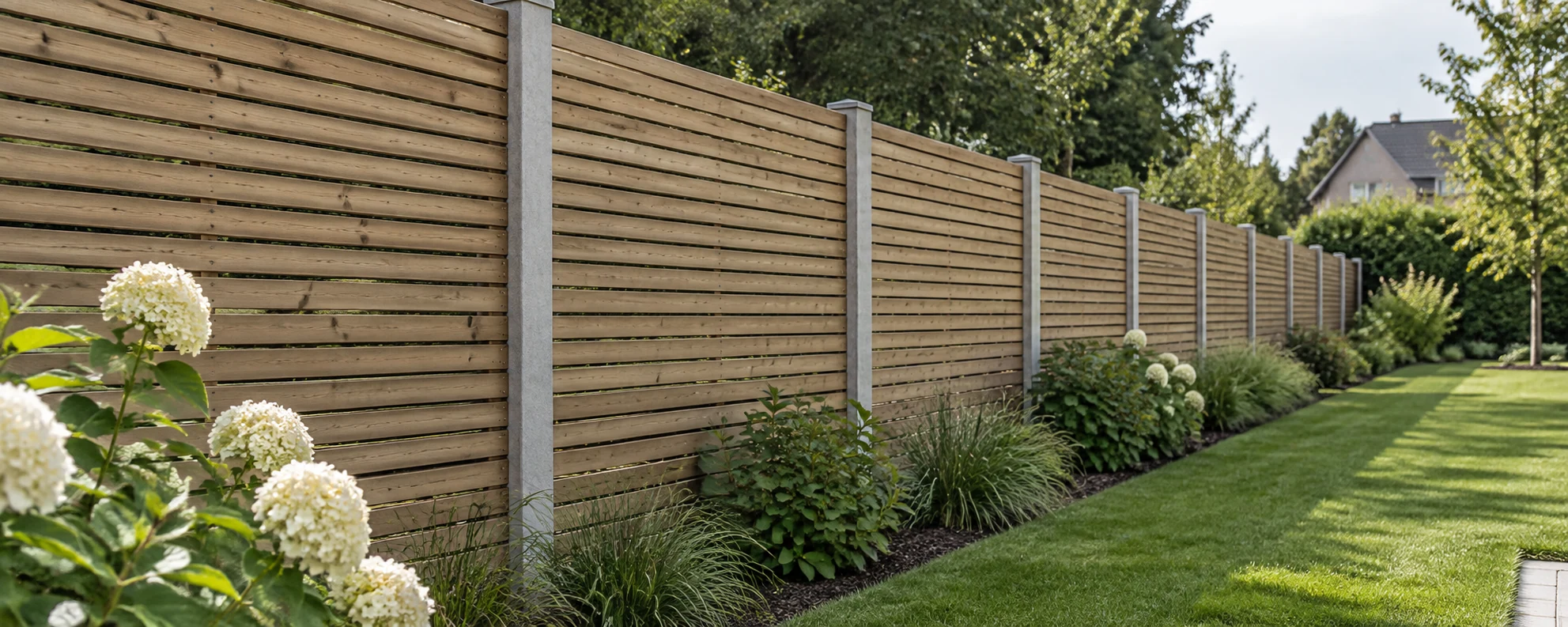
Think about where you sit, walk and look out into the garden. Screening needed beside a patio may differ from the effect wanted along the whole boundary. Our privacy fencing guide helps turn that requirement into questions about gaps, sightlines and the finished height.
Compare closeboard fencing and slatted fencing by their actual proposed construction, not their names alone. Ask how posts, ends and changes in level will look. Where the garden slopes, discuss the treatment of gaps beneath the fence and any effect on an existing gate before accepting the specification.
Keep repair decisions precise
When only part of a fence is being renewed, the connection to older sections matters. Ask which posts, panels and fixings would remain, and whether their condition permits the proposed repair. New timber may differ in colour from weathered components, so agree what a practical finished appearance means for your project.
Our repair or replace guide explains how to compare different scopes. If you want both options priced, make that clear. A quotation for one damaged bay should not be mistaken for a promise about the remaining fence, and replacement should not be assumed necessary simply because one panel has failed.
Protect the parts of the garden that stay
Identify planting, paving, outdoor lighting and other features close to the work. Tell us about known buried services without attempting to uncover them yourself. Discuss the proposed working space and what protection or preparation is included, especially where the boundary is close to a finished seating area.
Make removal explicit: old panels, posts, foundations and vegetation are different items. Ask which are included and which remain. If materials will be carried through shared areas, agree arrangements with the people responsible for those spaces before installation is booked.
Arrange approval for rented or business property
If you are enquiring for a landlord, agent or business, name the person who can authorise the quotation and variations. Explain any working-hour limits and documents required before access can be agreed. Our Leytonstone commercial service page provides a separate route for premises with operational requirements.
Resolve questions about ownership or the intended fence line with the relevant parties. A fencing proposal does not determine a disputed boundary. If you plan to change the height, use our height and planning guide as a starting point and confirm any site-specific requirements before work is instructed.
Request a free Leytonstone fencing quote
Call 020 3797 3058 or request a free quote with your postcode, approximate length and a brief description. Include access restrictions and whether you are considering a repair, a new run or both. Availability and the next assessment step will be discussed for your address.
Before accepting a proposal, use our quotation checklist to compare materials, removal, access arrangements and exclusions. A clearly recorded scope helps you understand what the price covers and what needs to be settled before installation.
Frequently asked questions
Can materials be brought through a narrow passage?
Describe its width, turns, steps and any overhead obstructions. The route and proposed components need checking before a delivery or installation method can be confirmed.
Do Leytonstone School Streets affect fencing visits?
They may affect a particular address or approach route. Check the current council scheme information and discuss attendance and delivery arrangements in advance.
Can I keep undamaged parts of my fence?
Ask for their condition and compatibility with the proposed repair to be assessed. The quotation should identify the retained components and the limits of the new work.