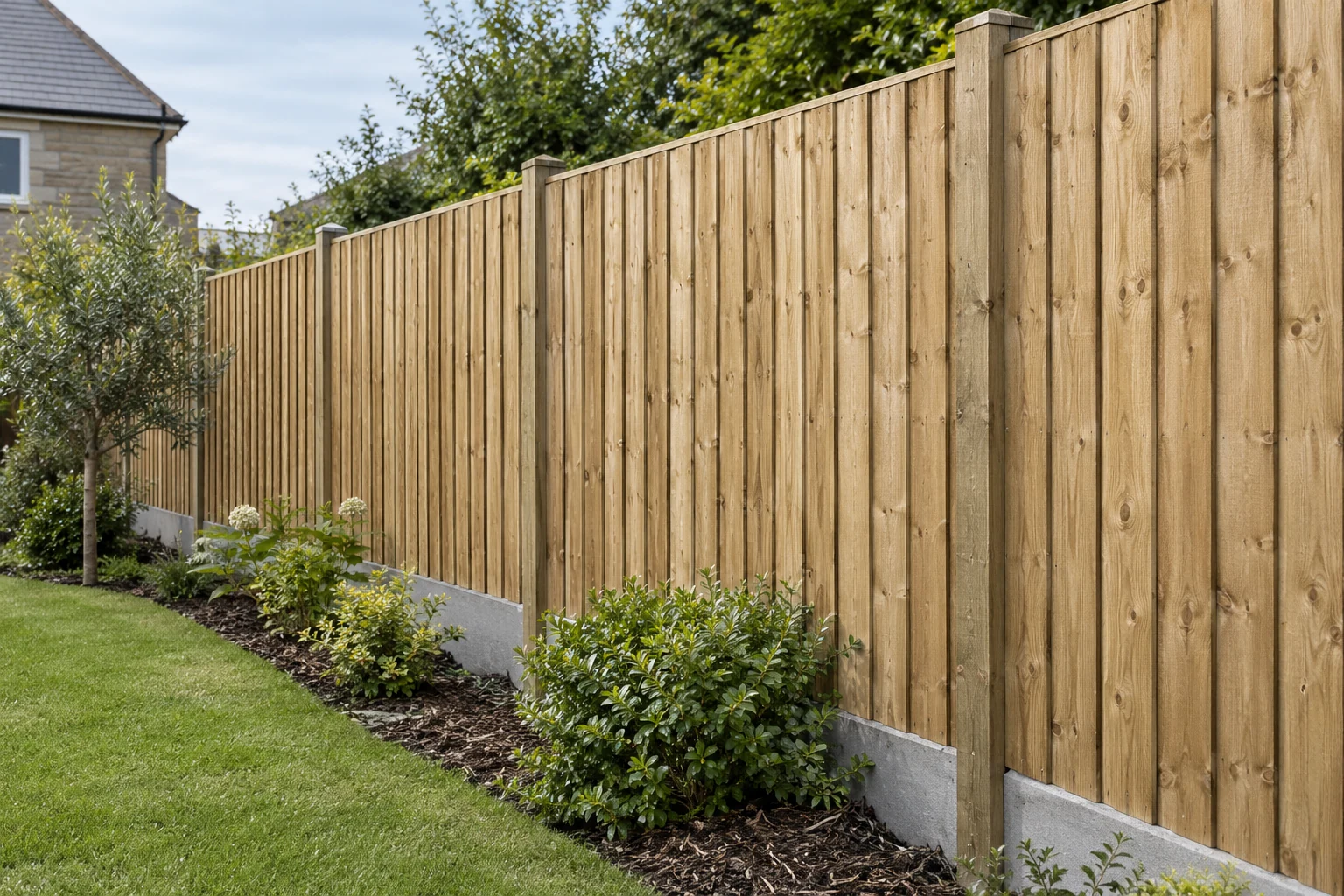
Start with a useful description of the space
Tell us what the new boundary should improve: privacy around a seat, a more consistent garden edge or replacement of deteriorated timber. Explain which part of the fence matters most and whether different sections have different purposes. You can begin without knowing the final product.
Our Mile End area overview provides the local enquiry route. Include the full address and describe the location of the work within the property. A rear garden, communal courtyard and business outdoor area may require different access and approval arrangements even when their addresses are close together.
Think through privacy before choosing height
The view from a seated position can differ from the view at an entrance or window. Identify the sightlines you want to reduce and the parts of the space where retaining light or openness matters. More height alone may not achieve the balance you want.
Our privacy fencing guide explores gaps, viewing angles and construction choices. A photograph can communicate appearance, but the proposed dimensions and assembly need defining for the actual site. Discuss how the chosen design will relate to retained boundaries and nearby features.
Specify panels, posts and junctions together
Our fence styles overview is an initial reference for comparing appearance. Ask the proposal to identify the boards or panels, supporting posts, connections and finish as a complete assembly. A familiar style name is not a substitute for describing the materials actually being supplied.
Map corners, gates and changes in level. Agree the intended top line and treatment of gaps beneath the fence. If new work joins a wall or an existing section, discuss the connection and expected appearance, including differences between new timber and weathered materials.
Decide whether the whole run needs renewal
If damage is limited, our Mile End repair page offers an alternative enquiry route. Consider the condition of surrounding components before committing to replacement of the entire boundary. Ask what a smaller repair would retain and what limitations would remain.
Where posts or sections are to be reused, their suitability for the proposed construction needs assessment. The quotation should distinguish retained parts from new materials. This helps you compare options based on the completed fence rather than simply the quantity of new panels.
Explain the route to the boundary
Describe how materials reach the work area after arriving at the address. Include gates, narrow turns, steps, shared passages and any route through the property. Component sizes and handling arrangements need consideration where the route is restricted.
Confirm permission before using adjoining land for access or storage. Identify who provides keys and which routes occupants need to keep using. Discuss unloading separately from carrying materials to the garden, because a vehicle reaching the street does not establish access to the fence line.
Keep surrounding features in the brief
Point out planting, paving, sheds and other fixtures near the proposed work. State what must remain and what can be moved beforehand. Ask which preparation and protection tasks are included, especially where removal of the old fence exposes areas that have been difficult to inspect.
Disclose known services and unusual supporting conditions. If the fence retains soil or serves a protective function beside a change in level, explain that separately. Ordinary screening should not be assumed suitable for those functions without the necessary assessment and a clearly agreed scope.
Review the complete price and removal scope
Our fencing costs guide explains why preparation, access and supporting conditions affect the total. Compare quotations against equivalent lengths, construction and removal requirements. Confirm whether old posts and foundations are included in removal, alongside disposal and any reinstatement.
Use our quotation checklist to review exclusions and assumptions. Agree how unexpected conditions will be reported before additional work is authorised. Confirm applicable product and workmanship terms, care instructions and the condition in which the work area should be left.
Request a free Mile End installation quote
Call 020 3797 3058 or request a free quote with the full address, approximate length and your priorities. Include known access restrictions and any owner or managing-agent requirements. Availability and the next assessment step can then be discussed for the particular project.
Resolve uncertainty over the intended boundary position and authority to alter it before instruction. Our fence height and planning guide offers background where changes are proposed, but site-specific requirements still need checking. Timing should be confirmed against the assessed job and available materials.
Frequently asked questions
Can I enquire before choosing the fence style?
Yes. Describe your priorities for privacy, appearance and use of the space. Materials and dimensions can then be discussed for the site.
What access details are useful for a Mile End installation?
Describe the route from the entrance to the boundary, including gates, turns, steps and shared passages. Identify who provides entry and any restrictions.
Can part of the existing fence remain?
Potentially, if its condition and construction are suitable. Ask the scope to distinguish retained components and explain their connection to the new work.