Describe the fault and its history
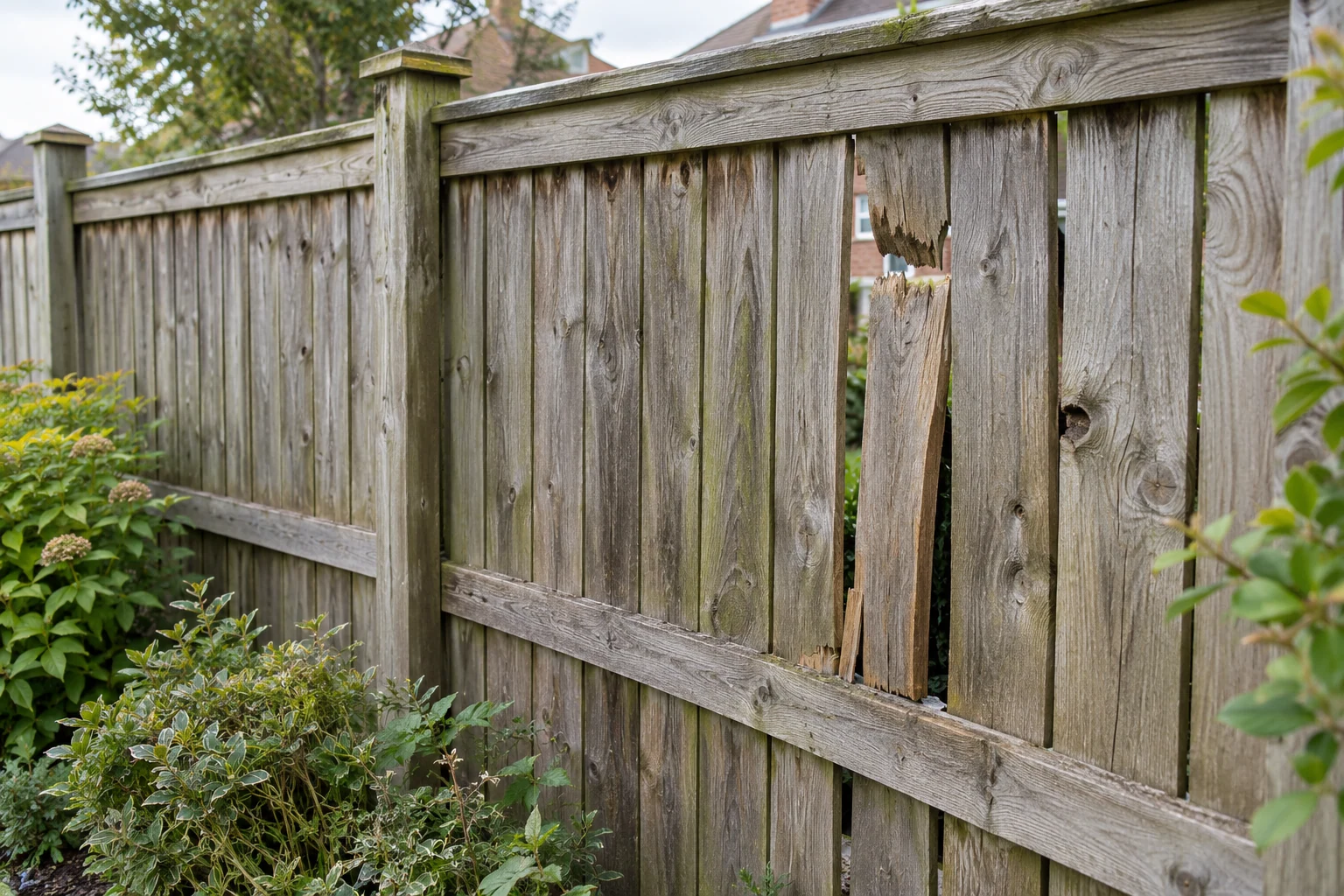
For a North London fence repair enquiry, provide the postcode and explain what you can see: a loose panel, damaged boards, movement around a post or several sections out of line. Say whether the change followed bad weather or developed over time, and mention any previous repairs.
Do not push on posts or pull panels to test them. If a section looks unstable, keep clear and take photographs only from a safe position. You can start an enquiry with a description when the damage cannot safely be photographed.
Separate panel damage from support problems
A broken panel and a failing support can need different work. A new panel needs suitable posts and connections; changing the infill alone may not address the cause of movement. Equally, a fault at one support does not establish that every adjoining panel must be discarded.
Our fence post repairs guide explains the information to provide when the concern centres on a post. Ask what parts the proposed repair will replace, what will remain and whether any further condition checks are needed once the affected area is accessible.
Consider compatibility before buying a panel
If the damage appears limited to a panel, record its general style and approximate dimensions without approaching anything unsafe. Include a wider view of the fence in any photographs. The surrounding arrangement matters when considering how a replacement section could fit.
Our fence panel replacement page explains why a matching-looking product is not necessarily the right replacement. Ask about the appearance of new timber beside older sections and confirm whether visual consistency or retaining usable material is your main priority.
Plan access to a rear or shared boundary
Tell us how the damaged section is reached and whether a gate, alley or passage is shared. If the work area is behind a house, explain whether there is direct access or whether arrangements inside the property would be needed. Mention steps or narrow turns before an appointment is planned.
For a flat, rental home or managed property, identify the person who can authorise work and the person arranging entry. Do not assume that access through a neighbouring property has already been agreed. Any necessary arrangements should be settled before installation is scheduled.
Flag features close to the damaged section
Explain whether paving, a raised bed, dense planting or stored items sit beside the fence. This helps define what can be inspected and what might need separate clearance. Tell us if the damage is near an entrance or a route that people normally use.
Do not remove material entangled with an unstable fence to improve the view. Describe the restriction and ask what assessment is needed. Where ground levels differ, include that in the enquiry so the proposed repair can be discussed in the context of the actual boundary.
Compare repair and replacement on the same basis
If both are practical, ask for separate scopes explaining the retained components, new materials and removal. The lower price is difficult to judge if it describes a different length of fence or leaves an unresolved support issue. Our repair or replace guide helps organise these questions.
A larger replacement may be worth discussing when problems affect several adjoining parts or you also want a different result. Our North London installation page covers that route. There is no need to choose full replacement before the condition and your priorities have been considered.
Agree the limits of the repair
Ask for the quotation to state the affected section and any assumptions about the fence being kept. Clarify disposal, access arrangements and the expected finished condition. Where new work meets old materials, ask which parts the workmanship terms cover and whether separate product terms apply.
Our quotation checklist can help you compare proposals and record questions. Keep the final scope and agreed changes together. A repair to one section should not be interpreted as a guarantee for every existing component along the boundary.
Request a North London repair quotation
Call 020 3797 3058 with the postcode, approximate extent of damage and access details. Tell us whether the fence affects a home, rented property or commercial premises. Availability and the next assessment step will need to be confirmed when you enquire.
For damage after strong winds, read our wind damage advice before inspecting the fence. We do not promise emergency attendance or insurance claim approval. Request a free quote to discuss the repair or replacement work that may be appropriate.
Frequently asked questions
Does one damaged post mean the whole fence needs replacing?
Not automatically. The post, its connections and the adjoining fence need assessment so the proposed scope addresses the problem and identifies suitable retained parts.
Can I send photographs instead of measuring the fence?
Photographs taken safely can help describe the problem. Approximate dimensions are useful where available, but do not approach unstable sections to obtain measurements.
Do repairs include removing the old materials?
Confirm disposal in the quotation. The scope should identify the materials being removed and how the work area will be left.