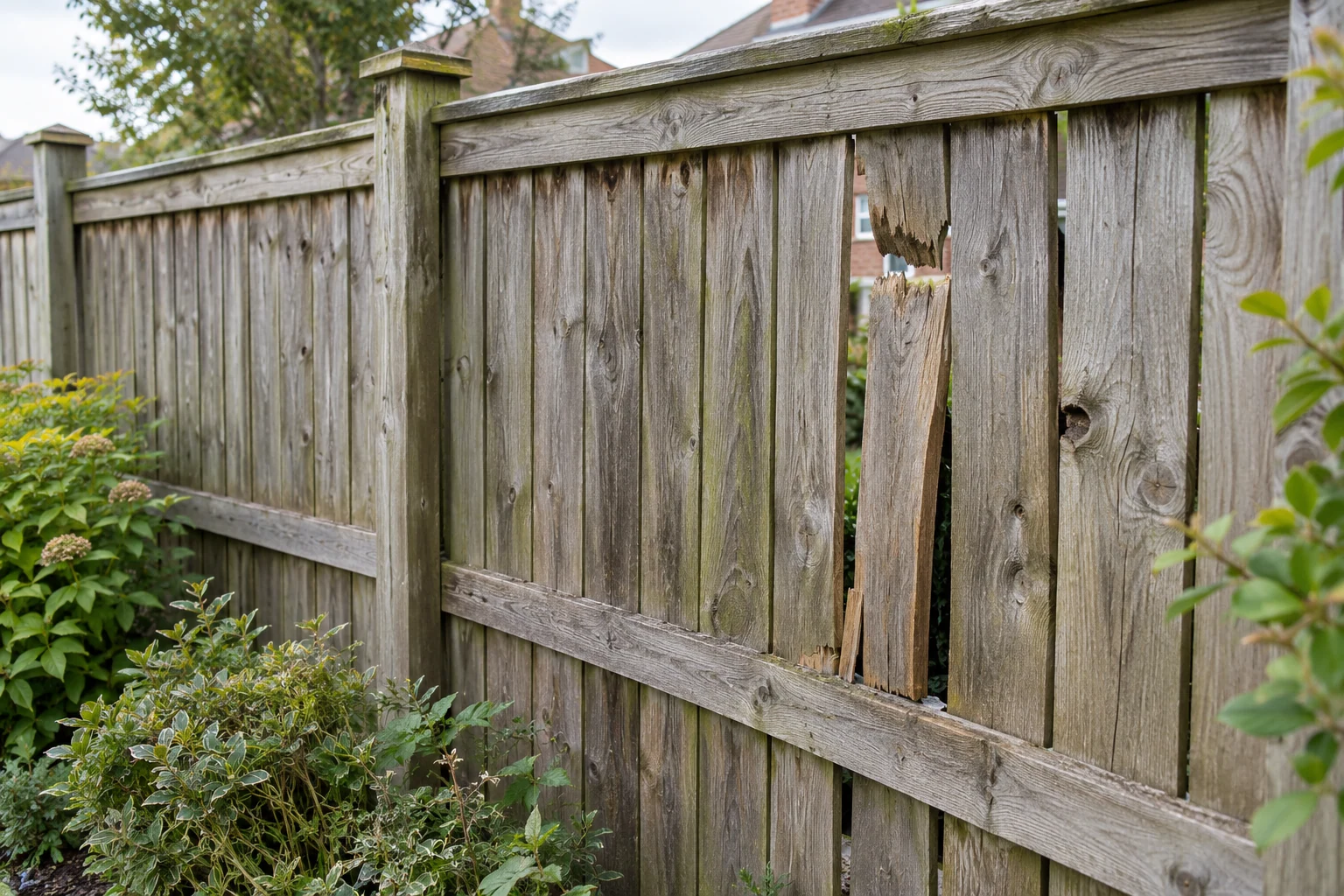
Wait until it is safe to assess the situation
Do not go outside to hold up a fence or attempt repairs while a storm is continuing. The Met Office's storm safety advice recommends staying indoors where possible, keeping away from vulnerable structures and not repairing damage during the storm. Afterward, avoid fallen or hanging cables and structures that may have been weakened.
A break in the wind does not prove that the fence is stable. Keep children, pets and visitors away from the affected section. If damage creates an immediate danger to people, contact the appropriate emergency service rather than relying on a fencing enquiry to obtain emergency assistance.
Record what you can see without testing it
From a safe position, note whether panels are missing, posts are leaning or several sections appear out of line. A general photograph can show how the damage relates to the rest of the boundary. Only take closer views if you can do so without approaching loose or unstable parts.
Do not push posts, lift broken panels or remove entangled material to see what is underneath. Tell the contractor if the damage cannot safely be photographed. A clear verbal description is enough to begin a conversation about the next step.
Explain the effect on access and use
Mention whether the fence affects a shared passage, garden entrance, parking area or route used by residents or staff. Describe which areas you have stopped using because of the damage. This helps the contractor understand the practical situation before discussing an appointment.
If the property is rented or managed, notify the person responsible for arranging work. Identify who can authorise the proposed scope and who can provide access. Do not assume that the person occupying the property is also the person who will approve the quotation.
Ask what needs assessment
A damaged panel may be only the most visible part of the problem. Posts, connections and adjoining sections need to be considered when deciding what can be retained. Explain any earlier movement or previous repairs, even if the latest damage appeared during a storm.
Our fence repairs page covers the available enquiry routes. If the concern is concentrated around a support, read about fence post repairs. Where the supports appear intact but an infill section is damaged, fence panel replacement may be a topic to discuss, subject to assessment.
Compare a repair with a defined replacement scope
The entire boundary does not automatically need replacing because one section has failed. Equally, replacing the obvious broken part may not address other problems. Ask the contractor to explain the proposed limits of the work and why the retained sections are considered suitable.
Our repair or replace guide helps organise that discussion. If alternative scopes are offered, compare the components, removal and finished result as well as the totals. Note whether matching the appearance of the existing fence is important to you.
Keep records if you are contacting an insurer
If you intend to ask your insurer about the damage, contact them for their process and evidence requirements. Keep safely obtained photographs, correspondence and quotations together. A contractor's proposal describes work; it does not establish what your policy will cover or whether a claim will be accepted.
Tell the contractor if you need to wait for an insurer or another decision maker before authorising work. Do not assume that requesting a quotation reserves an installation date or satisfies your insurer's requirements.
Prepare the next installation properly
If replacement is proposed, explain how exposed the boundary feels, any previous problems and the result you need. Discuss the complete fence system and site conditions rather than asking for a panel described as storm-proof. No performance promise is made by this guide.
Use the fencing quotation checklist to record access, removal and the proposed supports. Once work is complete, keep the product details and care information so future questions can be answered against the actual specification.
Request a damage assessment
Call 020 3797 3058 with your postcode, the approximate extent of the damage and any access restrictions. Describe whether the issue affects a home, rented property or business premises. You can request a free quote before deciding whether repair or replacement is the right approach.
Availability and the scope of assistance must be confirmed when you contact us. This page does not promise emergency attendance, a temporary securing service or a particular response time.
Frequently asked questions
Should I try to hold a loose panel in place during a storm?
No. Keep clear of unstable sections and do not attempt repairs during a storm. Follow current Met Office advice and seek appropriate emergency assistance if people are in immediate danger.
Does wind damage mean the whole fence must go?
Not necessarily. The affected components and adjoining fence need assessment. A local repair, a replacement section or a new run may be considered depending on the findings.
Can you confirm whether my insurer will pay?
No. Ask your insurer about the terms of your policy and their claim process. A fencing quotation does not confirm insurance cover.