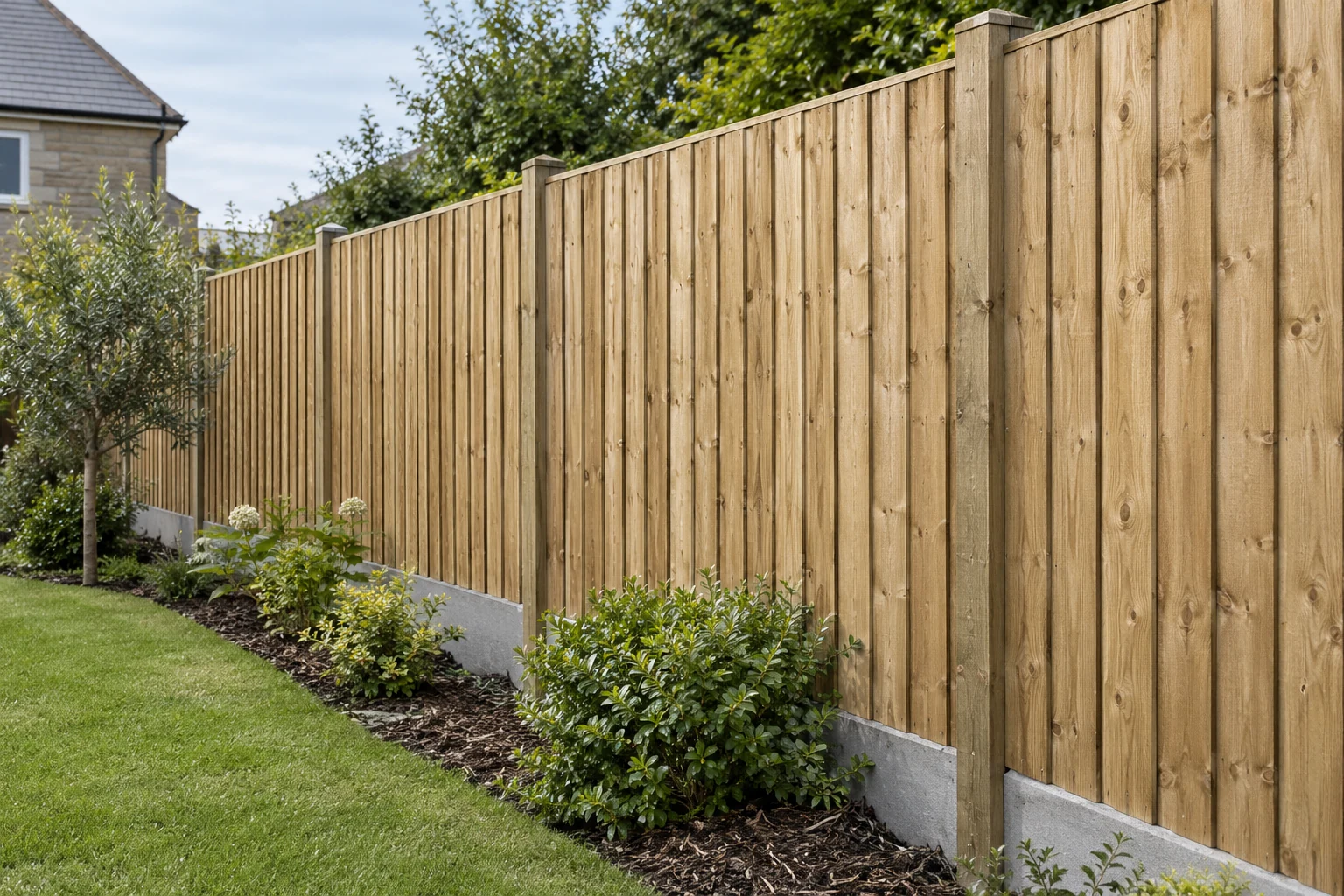
Establish the reason for the new fence
Explain what you want the installation to achieve: replace a deteriorated run, improve screening or change the appearance of a garden boundary. Include the postcode and approximate length. A description of the result you want is enough to start a conversation before exact measurements are available.
If the problem is confined to a few components, our Chingford repair service may offer a more focused route. Ask what could remain before committing to complete replacement. The decision should reflect the condition of the fence and your intended result rather than an assumption based on one damaged panel.
Follow the boundary through its level changes
Describe slopes, steps, raised beds and different ground levels on either side. Ask how the proposed panels or boards will be arranged and what gaps will remain beneath them. The appearance of the top line should be considered alongside the way the fence meets the ground.
Identify the ends, corners and gate openings before agreeing quantities. If the old fence holds back soil, say so specifically. A garden fence should not be treated as a replacement retaining structure without the existing arrangement and required function being assessed.
Choose the construction as well as the style
Our fence types overview provides a starting point for appearance. Once a preferred style is identified, ask for the proposed dimensions, infill, posts and connections to be recorded together. Similar product names do not necessarily describe equivalent assemblies or quotations.
For privacy, explain where you will sit or stand and the view you want to reduce. Our screening guide helps consider gaps and viewing angles alongside height. Discuss the ends and connections to retained fencing, including realistic expectations where new timber meets weathered materials.
Plan the route into the Chingford garden
Describe access from the street through any driveway, side passage, garage or building. Mention steps, tight turns and overhead obstructions. A route that is convenient for people may still need checking against the size of the components being delivered.
Our Chingford overview includes local parking considerations and a council information link for checking the address. Agree parking, unloading and who will arrange any necessary permissions before attendance. If the proposed method depends on neighbouring or shared land, settle access separately with the relevant party.
Record preparation and features to retain
Point out planting, paving, outdoor equipment and known services near the proposed run. Identify what must stay and which items can be moved. Agree who will prepare access to the post positions and what protection is included before the job starts.
Ask how old panels, posts and foundations will be treated, including disposal. Removal of the fence does not automatically include every clearance task along the boundary. If the new fence would rely on an existing wall or other structure, explain that arrangement so any assessment needed is identified.
Confirm approvals and the sequence of work
Resolve uncertainty about the intended fence line with the relevant parties before instruction. If the height or position is changing, our height and planning guide provides background, but the requirements for the property still need checking. A quotation does not settle ownership or grant permission for an alteration.
Ask how removal and installation will be sequenced and whether gates or shared routes will be affected. Mention concerns about leaving the boundary open. The estimated programme should be based on the products, preparation and site conditions, with availability confirmed for the actual job.
Compare the full installation scope
Our fencing costs guide explains why access, supporting components and removal affect the total. Compare proposals against the same specification and ask for exclusions to be explicit. If you want alternative styles priced, keep the product and scope differences clear for each option.
For a rental or managed property, identify who accepts the quotation and who provides access. Agree how changes will be authorised if the decision maker is off site. Specialist specifications or documentation requirements should be supplied early so capability can be reviewed before commitment.
Request a free Chingford installation quote
Call 020 3797 3058 or request a free quote with the postcode, approximate length and preferred result. Mention changes in level, old-fence removal and any access restrictions. The next assessment step will be discussed for your property.
Use our quotation checklist to review materials, preparation, disposal and the completed condition of the work area. Confirm the applicable product and workmanship terms and ask about care instructions for the supplied materials. A defined scope makes the proposed boundary and its installation easier to understand.
Frequently asked questions
Can a new fence follow changes in garden level?
Describe the levels and ask how the proposed construction will handle them, including the top line and gaps beneath the fence. The appropriate detail needs confirming for the site.
What if soil rests against the existing fence?
Mention it before a replacement is specified. The retaining arrangement requires assessment; ordinary garden fencing should not be assumed to take over that function.
Can I compare different styles in the quotation?
Ask for separately specified options identifying construction, supports, preparation and removal so the differences in scope and price are clear.