Choose the description closest to your problem
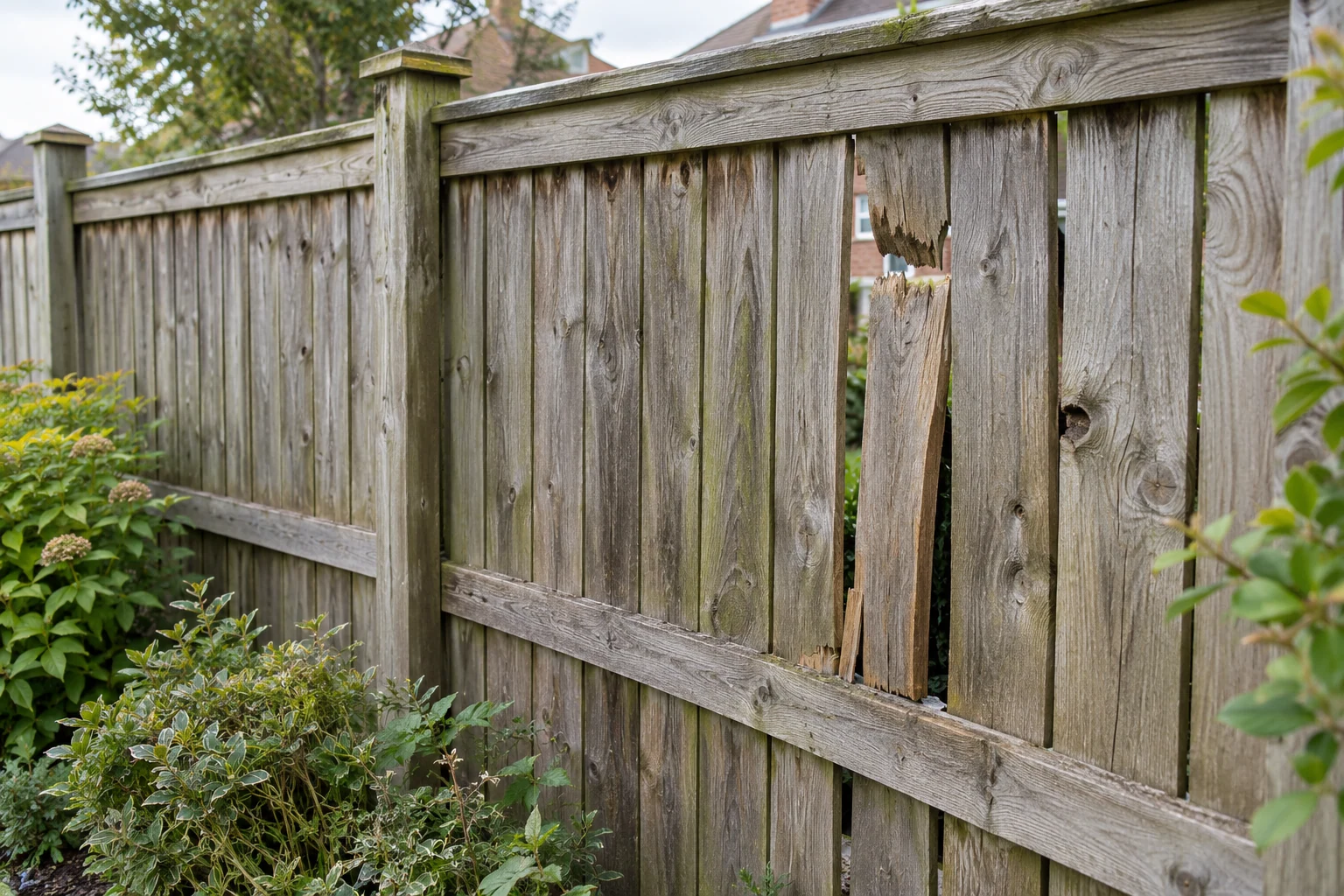
A board has split but the surrounding fence appears unchanged: explain the number of damaged boards and their position. A panel has detached at one side: mention the connection and whether the supporting post appears affected. A whole bay leans: say whether neighbouring sections lean with it. These are useful enquiry descriptions, not diagnoses or instructions to test the fence.
Call 020 3797 3058 or request a free quote with the Plaistow address. Do not delay an enquiry because you cannot name the panel type. A plain explanation of the fault is enough to start a conversation about the next assessment step.
When a replacement panel may not solve the problem
The quotation needs to address the component carrying the load as well as the visible damage. A fresh panel attached to an unsuitable support leaves an unresolved issue. Ask which posts, connections and adjacent sections have been considered when a panel-only repair is proposed.
Use our post repair guidance if the main concern is movement at a support. Our panel replacement guide is more relevant when the enquiry centres on damaged infill. The condition of hidden parts cannot be established from a short description, so some decisions may need inspection.
Tell us your priorities for the repair
Decide what matters most to you: restoring a particular section, keeping usable materials or achieving a consistent appearance across the run. These preferences can produce different proposals. New boards may be visibly different beside weathered timber even when their dimensions are compatible.
For example, replacing one damaged bay and renewing the entire rear run are different scopes. Ask the first proposal to identify the limitations of the retained fence, and the second to explain the additional removal and new construction. This is an example of comparing options, not a recommendation to replace serviceable sections.
Our repair-or-replacement comparison provides more questions to ask. If renewal becomes the preferred option, the Plaistow installation page covers the next steps without requiring you to begin a separate enquiry.
Prepare the visit without disturbing the damage
Keep clear of loose or leaning components. Do not climb, straighten or dismantle the fence to produce a better description. Mention whether the damage affects a doorway, shared passage or a space regularly used by children or pets, so that the situation is understood when you call. Attendance must be confirmed; this is not a promise of emergency cover.
Describe obstacles beside the repair position and the route used to reach it. Tell us what can be moved safely without approaching the unstable area. If access from a neighbouring garden is necessary, arrange permission rather than assuming it is available.
Check the Plaistow address for attendance arrangements
Newham's parking-zone lookup lets you check a specific street or address and its controlled parking times. Use it when organising a visit, then confirm current signs and any temporary restrictions. A general description such as Plaistow does not establish the parking arrangement outside your property.
Parking is only one part of access. Separately explain where materials enter, who opens locked gates and whether anything must pass through the home. Our Plaistow service overview connects the local installation and commercial enquiry routes if the job extends beyond a domestic repair.
Know exactly what acceptance covers
Before approving the quotation, check the named repair position, replacement components, parts retained and disposal arrangements. Ask whether work around nearby paving or planting is included. Agree how any additional defect will be reported and who must approve an amended price before work continues.
For a rented property, distinguish the occupier who provides entry from the person paying for and authorising the repair. Confirm the terms applying to the new work; repairing one bay does not describe the condition of every existing section. Our quotation checklist helps keep these questions together.
To begin, provide the address, fault description, approximate number of affected sections and your contact details. You do not need a finished specification or exact measurements to ask for a free quotation.
Frequently asked questions
Is a leaning panel always a panel-replacement job?
No. Movement may involve supports or connections as well as the panel. The relevant components need assessment before the repair is specified.
Can I ask for both a repair and replacement option?
Yes. Ask each option to state what remains, what changes and any limitations, so you compare the completed result rather than price alone.
Should I buy a panel before requesting the repair?
It is better to establish fit, supporting conditions and the proposed scope first. Similar-looking panels are not necessarily interchangeable.