Start with observations you already have
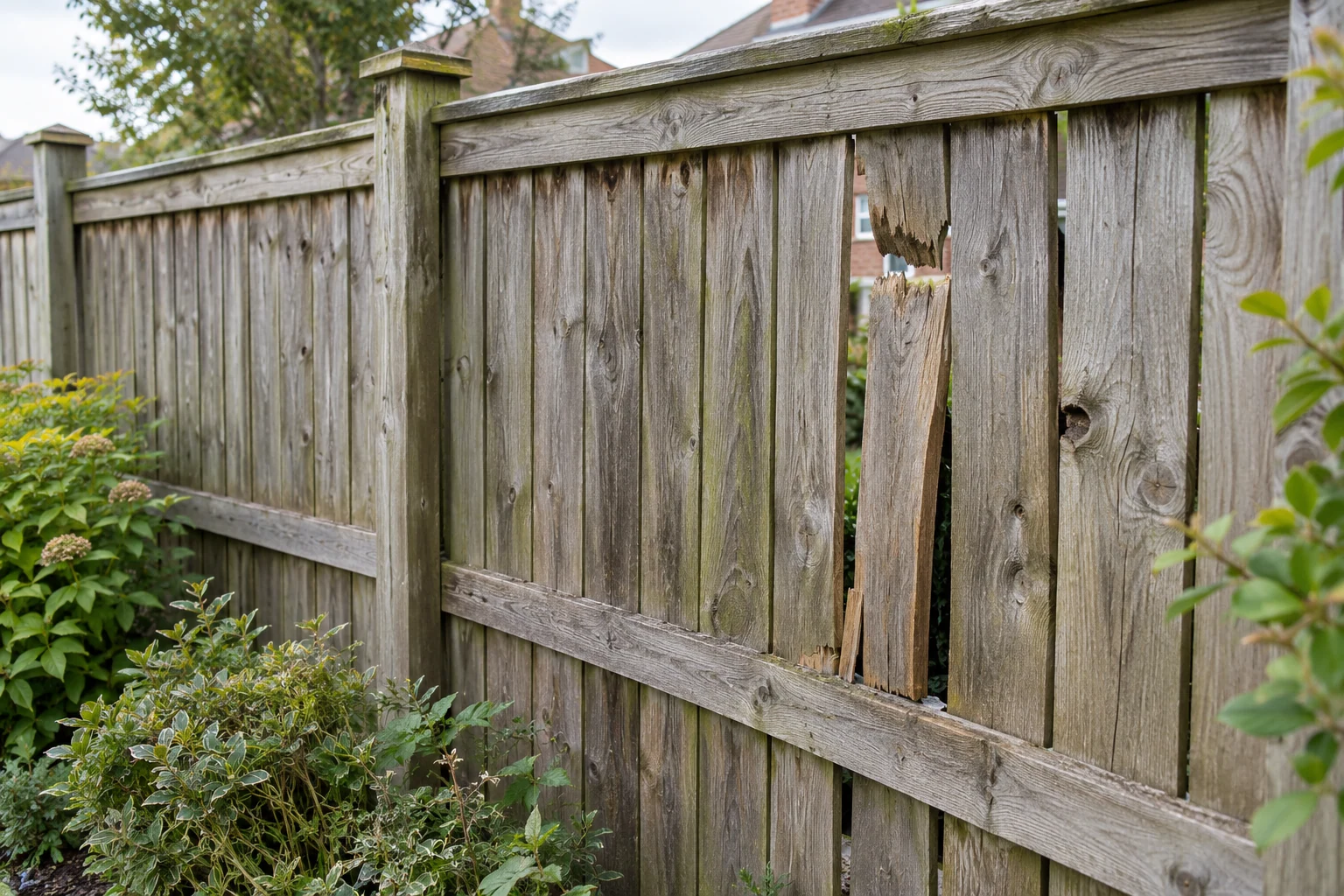
Tell us where the fault is and what changed. A useful account might say that a panel has detached beside the gate, a post has begun leaning or boards have split along the rear boundary. Mention when you first noticed it and whether there has been earlier work in that position.
Call 020 3797 3058 or request a free quote with the Dalston address. You do not need to dismantle anything, identify a manufacturer or produce a technical diagnosis. Describe the fault from a safe position and keep people away from loose or unstable components.
Use fixed references to define the job
Identify the affected section relative to the house, gate or corner so the enquiry and quotation refer to the same area. Give the approximate number of bays involved. If other sections appear affected, distinguish those observations from the part you originally wanted repaired.
Our Dalston service overview links the local enquiry routes. If you are coordinating the work for someone else, ask them to confirm the location description before the visit. This is particularly useful where the person providing access will not be the person approving the price.
Avoid buying a component before fit is established
Two panels that look alike may differ in size or construction. More importantly, the existing support may not be suitable for a replacement. Ask the proposed repair to explain what it relies on as well as what it supplies.
Our panel replacement guidance helps with infill questions. The post repair page is more relevant when movement appears centred on a support. An initial description cannot establish hidden condition, so the proposed method may need confirmation after closer assessment.
If you already own replacement materials, mention that rather than assuming they can be used. Suitability, dimensions and responsibility for the supplied product should be discussed before the work is agreed.
Compare what remains after each option
A limited repair and a longer renewal can both sound reasonable while leaving very different amounts of existing construction in place. Ask each proposal to identify the retained parts, work to the connections and any limitations that remain outside its scope.
For example, changing one panel is not the same as renewing that bay with its supports. This illustrates a scope difference; it is not a diagnosis of your fence or a description of a completed local job. Our repair-versus-replacement guide provides questions for comparing those outcomes.
The Dalston installation page covers a new run if that becomes the preferred purchase. There is no need to select complete replacement before asking what a targeted repair could achieve.
Make visual expectations explicit
Decide whether retaining usable materials or matching the appearance is the stronger priority. New timber may stand out beside weathered boards, and an alternative product can have a different profile even when it fits the opening.
Ask what the visible junction will look like and how an unavailable original product would be handled. Agree the alternative before selection. Compatibility and appearance are separate decisions, and the quotation should not leave either to an unstated assumption.
Describe the route and the working room
Explain how the damaged section is reached, including gates, tight turns, steps and shared passages. Identify anything beside it that can be moved safely beforehand. Do not clear vegetation or stored material from an unstable fence simply to improve the view.
Access from adjoining land requires an arrangement with the responsible person. Confirm who supplies entry and when shared routes are needed by others. Mention any affected doorway or commonly used path when discussing attendance; timing and availability need confirmation for the circumstances.
Set a clear approval rule for further findings
Ask how a newly discovered defect would be recorded, explained and priced. Name the person authorised to accept additional work before it proceeds. A keyholder or occupier should not be expected to approve extra cost unless they have that responsibility.
Disclose separately if the boundary retains soil or performs a protective-barrier function. Those requirements may need assessment beyond ordinary timber repair. Our repair quotation checklist helps record the agreed components, removal, disposal and completed condition of the work area.
Before acceptance, confirm the applicable product and workmanship terms and any care instructions. A repair to one named section does not establish the condition of the entire retained boundary. Begin with the address and fault description, then agree the extent of work once the relevant condition is understood.
Frequently asked questions
Should I buy a replacement panel before making an enquiry?
Establish the dimensions, supporting condition and proposed method first. If materials are already purchased, mention them so suitability can be discussed.
Can someone else provide access while I approve the work?
Yes, identify both contacts and make clear who can approve the quotation or any variation.
Does repairing a panel confirm the rest of the fence is sound?
No. Ask which components have been considered and which remain outside the agreed repair scope.