Start with the problem you can see
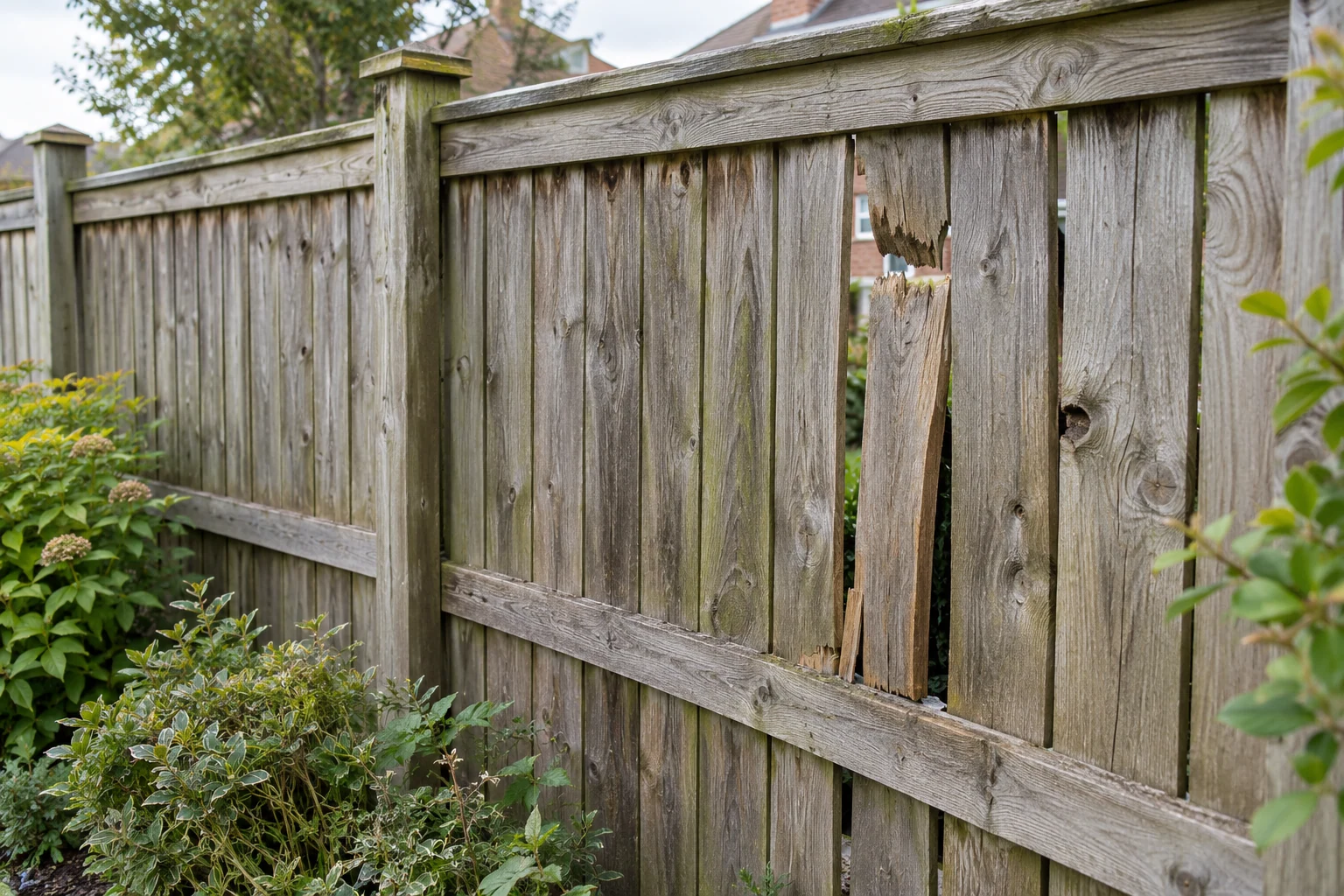
Tell us whether the fence has broken boards, a displaced panel, a leaning post or loose connections. Describe the affected length and whether neighbouring sections also move or look deteriorated. You do not need to diagnose the construction before making an enquiry.
Give the full Bethnal Green address and the location of the damage within the property. Our Bethnal Green overview provides the local enquiry route. Mention whether the boundary serves a private garden, shared courtyard or managed property, together with the contact who can approve work.
Understand what a panel repair depends on
A sound replacement panel needs suitable posts and connections. If those supports are defective, a panel-only repair may not address the underlying problem. Describe any movement you have already noticed without pushing or pulling an unstable fence to test it.
Our post repair guidance explains why supports need attention. Ask the assessment to distinguish the visibly damaged component from the parts that hold it in position. Where concealed defects cannot be checked initially, the proposed scope should explain what remains uncertain and how discoveries will be handled.
Compare a targeted repair with wider renewal
A limited repair can be considered where the surrounding construction remains suitable. If deterioration extends across several sections, replacing individual pieces may leave other weak areas unresolved. Discuss which components can reasonably stay and the limitations of keeping them.
Our repair or replace guide sets out useful comparison questions. The Bethnal Green installation page covers a new run if that is the better option. Compare the removal, retained condition and finished appearance alongside the price, so the decision reflects the whole boundary rather than one damaged bay.
Allow for differences between old and new
Weathered timber and replacement components may have different colours and profiles. Similar-looking panels can also differ in size or construction. If the repair is in a prominent position, explain how important a close visual match is before materials are selected.
Our panel replacement guidance covers questions about fit and supports. Ask what can be matched and what differences should be expected. A quotation should describe the proposed repair accurately without implying that new timber will immediately blend into the existing fence.
Arrange access to both the fault and its supports
Explain the route to the affected section and any obstacles around it. Planting, furniture, stored items or structures may restrict the working space. Say what can be moved beforehand and what needs protection during the repair.
If access from the other side is needed, permission must be agreed with the responsible person. Do not assume a neighbour's garden or a communal passage is available for working or storage. Identify locked gates, narrow turns and routes that occupants need to keep using.
Treat unstable damage cautiously
Avoid leaning on, straightening or dismantling unstable fencing. Keep people away from loose components while the next step is discussed. There is no need to climb the fence or move a damaged panel to provide a more detailed account of the fault.
Mention an affected entrance or shared route when you call. Attendance and availability must be confirmed for the particular enquiry. If the fence also serves a retaining or protective-barrier function, make that clear, because ordinary timber repair may not address those additional requirements.
Define what the quoted repair includes
Ask the proposal to identify new components, retained parts, removal and disposal. Clarify any preparation or reinstatement around paving and planting. Agree how the work area will be left, particularly where materials must pass through occupied space.
Our quotation review checklist helps identify missing details. Establish who can authorise changes if further deterioration is uncovered. For rented or managed premises, the person providing access may not be authorised to approve the repair or a variation in price, so identify both roles before scheduling.
Request a free repair quote
Call 020 3797 3058 or request a free quote with the address, a description of the damage and its approximate extent. Include known access restrictions and whether the boundary is shared or managed. The next assessment step can then be discussed against the actual circumstances.
You can enquire without having chosen between repair and replacement. Start with the fault and the result you need. Before accepting a proposal, confirm its limits, the applicable product and workmanship terms and any care requirements for the new components.
Frequently asked questions
Can broken boards be repaired without replacing the entire fence?
A limited repair may be possible if the remaining construction is suitable. The supports and adjacent components need consideration before the scope is confirmed.
Do you need access from both sides of the fence?
That depends on the fault and proposed method. Explain any access restrictions early, and obtain permission where adjoining or shared space is needed.
Can you confirm repair suitability from my description alone?
A description helps establish the enquiry, but concealed damage and supporting conditions may need inspection before a final repair scope is agreed.