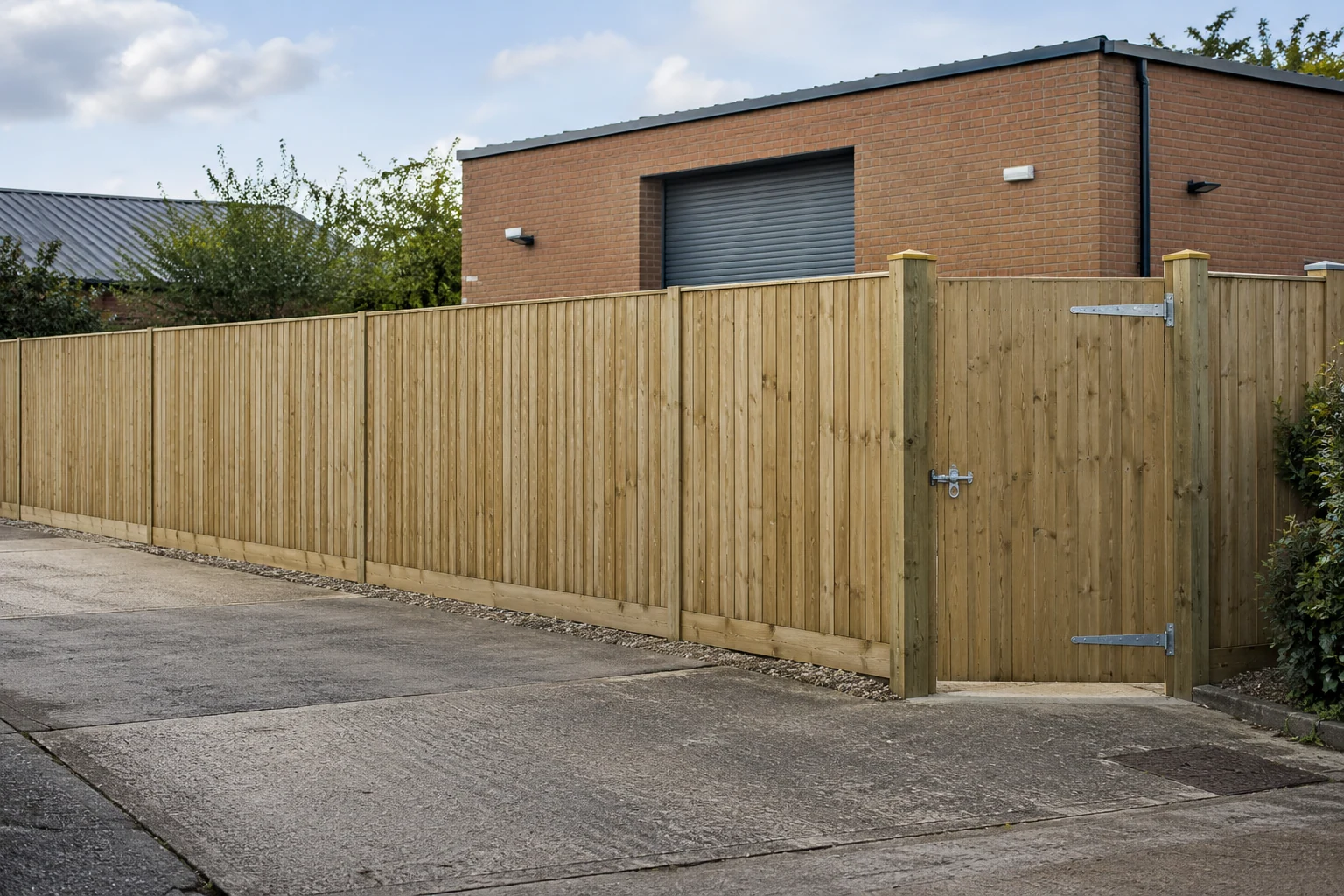
Turn a maintenance problem into a clear brief
A commercial fencing enquiry often begins with a practical problem: an unattractive boundary, damaged screening or an outdoor space that no longer works for its users. State the intended result and identify the part of the premises affected. A defined brief helps distinguish essential work from optional appearance improvements.
Include the full Canary Wharf address, building name and working entrance. Our Canary Wharf area overview provides the local enquiry route. The address alone does not establish who controls the boundary, whether it is shared or what access arrangements apply, so include those details where known.
Separate screening from security requirements
Explain whether you want visual screening, a division between outdoor uses or a particular security function. Those objectives can lead to different specifications. A timber screen chosen for appearance should not be assumed to meet a prescribed security or protective-barrier requirement.
If your organisation has a product specification or performance requirement, provide it before the work is priced. Capability and suitability need to be confirmed against that brief. Do not rely on a general commercial fencing description as evidence of specialist certification or an offer to supply every type of security system.
Identify new work and repairs separately
For a mixed project, mark the runs needing replacement and the components you would like retained. Include gates, corners and connections to other structures. Our Canary Wharf installation guidance covers new runs, while the Canary Wharf repair page explains how localised damage can be assessed.
Ask the quotation to show the limits of each element. This makes it easier to approve a repair now without unintentionally commissioning a larger renewal, or to compare a complete replacement with retaining serviceable sections. The condition and appearance of what remains should form part of that comparison.
Coordinate work around occupiers
List the entrances and routes used by staff, residents, visitors and deliveries. Describe when they need to remain available. If the boundary is next to a shared outdoor space, identify who can agree temporary arrangements and how people will be told about the work.
Our managing-agent guidance covers coordination between owners and occupiers. A programme should be agreed around the particular premises, materials and scope. Out-of-hours working, immediate attendance or a fixed completion date should not be assumed without confirmation.
Confirm the practical delivery route
Ask the property contact about any loading bookings, entry requirements or induction arrangements. Describe the route from the unloading point to the boundary, including gates, stairs, passages and narrow turns. These details affect handling and the suitability of proposed component sizes.
Confirm where materials can be placed and how removed fencing will leave the site. Permission to enter the building is not automatically permission to occupy a communal route or storage area. Make the responsible contact and the agreed arrangements clear before scheduling the work.
Check the supporting construction
Explain whether the fence is installed in the ground, on a wall or on a raised structure. Supply relevant drawings or existing specifications where available. Connections to a building or waterproofed surface need consideration before a conventional fence installation method can be assumed.
Disclose any retaining function, waterside position or change in level. Ordinary boundary screening is not interchangeable with protective guarding or specialist structural work. The necessary assessment and responsibility for those functions should be established before agreeing the commercial scope.
Make quotations easier to approve
Record dimensions, construction, supporting posts, connections and finish together. Our fence styles overview can help communicate appearance, but the purchasing decision needs more than a style name. Clarify preparation, protection of nearby surfaces, removal, disposal and any reinstatement included in the price.
Use our quotation review checklist to identify exclusions and unresolved assumptions. Name the person who can approve variations, particularly if the person providing site access has a different role. Provide procurement and documentation requirements early so they can be considered before acceptance.
Request a free commercial fencing quote
Call 020 3797 3058 or request a free quote with your Canary Wharf address, proposed scope and main operational constraints. Include the approving contact and any available specification. Availability, suitability and the next assessment step will be discussed for the actual project.
Agree how completion will be reviewed and what information you need at handover. Confirm the applicable product and workmanship terms, any care requirements and the condition in which the work area should be left. A clearly bounded proposal helps the business understand both the work being purchased and its responsibilities before it starts.
Frequently asked questions
Can repairs and new fencing appear in one quotation?
Yes, they can be discussed together. Ask for the limits of each element, retained components and removal requirements to be clearly distinguished.
Do you provide every type of commercial security fencing?
Specialist products and performance requirements need individual review. Supply your specification so capability and suitability can be confirmed before a scope is agreed.
Who should approve work at a managed property?
Identify the person authorised to accept the specification and variations, as well as the contact providing access. These may be different people.