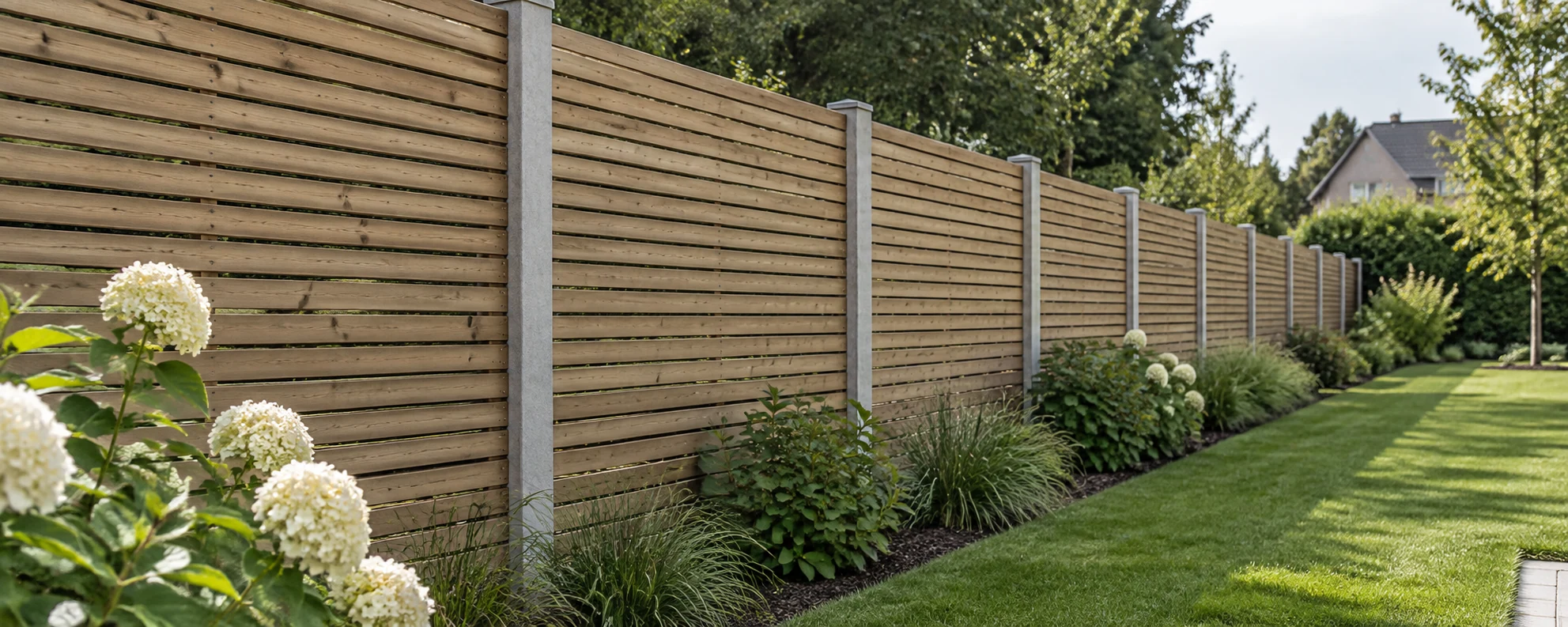
Find the care instructions for your fence
Before choosing a treatment, identify the panels or boards, their manufacturer and any existing finish. Check your quotation, invoice or handover information. A recently installed fence may have several components with different specifications, so do not assume that the instructions for a panel also describe every post or accessory.
If the fence predates your ownership and its specification is unknown, explain that when seeking advice. Photographs of the general construction can help the discussion, but they cannot reliably establish the original preservative treatment or the condition of concealed parts.
Follow product-specific treatment advice
Forest Garden's timber care guidance describes seasonal movement and differences between pressure-treated and dip-treated products. It also advises following coating instructions and addressing exposed cut ends in treated timber. These are manufacturer-specific directions, not a universal treatment schedule for every fence.
Use the instructions for your actual product to decide whether retreatment is needed, which coating is compatible and when it can be applied. Keep colour decoration separate from any preservation requirements. A paint colour you like does not, by itself, tell you whether the product meets the fence manufacturer's care requirements.
Make a simple visual record
Look at the fence from a safe, accessible position and note changes you can see. Useful observations include a newly leaning section, a board that has become detached or a change around a connection. Take a general photograph and record the date so you can explain what is different if you need help later.
Do not pull on panels or push posts to test their strength. If a section looks unstable, keep people away from it and ask for an assessment. Our fence repairs page is the starting point for discussing a fault rather than routine appearance care.
Separate appearance from condition
A change in colour or a visible mark is not enough on its own to diagnose structural damage. Equally, a fresh coat of stain is not evidence that a support is sound. Describe the condition you can see without assuming that a cosmetic treatment will fix movement or a broken connection.
When asking about a concern, explain whether it is new, whether it followed bad weather and whether the fence has previously been repaired. This gives a more useful history than describing every change as rot or treating every split as harmless without checking it.
Plan cleaning before painting
Read both the fence manufacturer's guidance and the proposed cleaning or coating product instructions before starting. Check the required surface preparation, weather conditions, drying period and precautions for nearby plants and surfaces. Ask the supplier if an existing coating makes the new product unsuitable.
Do not assume that pressure washing, strong cleaners or abrasive preparation are appropriate for your fence. If you cannot reach the work safely or the timber condition is uncertain, stop and seek advice. This guide does not prescribe a cleaning method for an unidentified product.
Keep the boundary accessible for checks
Think about how you will reach the fence as the garden changes. Avoid arranging storage so that damaged sections become hidden or an access route is blocked. If new landscaping will change ground levels beside the fence, discuss that change with the installer before work begins.
Tell the contractor if mature planting prevents a clear view of the posts or panels. Do not remove vegetation that appears to be entangled with an unstable section yourself. Establish what needs assessment and who will carry out any clearance before planning repairs or redecoration.
Keep repair and guarantee records together
Save the original specification, care guidance, receipts and any written changes to the installation. If a repair is carried out, record which sections are new and which remain from the existing fence. That distinction can matter when asking about product cover or arranging further work.
Our insurance and guarantees page explains the questions to ask about workmanship and product terms. Request the terms that apply to your installation rather than relying on a general claim about how long timber should last.
When to ask about repair or replacement
If a post is leaning or components have become loose, describe the problem before investing in appearance work. Our repair or replace guide can help you understand the questions behind a repair scope, while the fence styles overview is useful if you are considering a different arrangement.
Call 020 3797 3058 with your postcode and a short description of the concern. Tell us whether you need a repair quotation or are planning a replacement. Advice about a specific treatment may also need input from the product manufacturer.
Frequently asked questions
How often should I treat my fence?
Follow the care schedule for the actual timber product and coating. Treatment requirements vary, so this guide does not set one annual rule for every fence.
Can I paint a new fence immediately?
Check the fence and coating manufacturers' instructions first. Surface condition, existing treatment and drying requirements can affect when a coating should be applied.
Will staining repair a leaning fence?
No. A coating changes or protects the surface according to its specification. Movement in the fence needs a separate assessment of the affected components.